
Thirty-three years, one arc.
A game made in Baghdad under sanctions, lost, and brought back twice — first to the world's phones, then rebuilt from the ground up. Told in three acts.
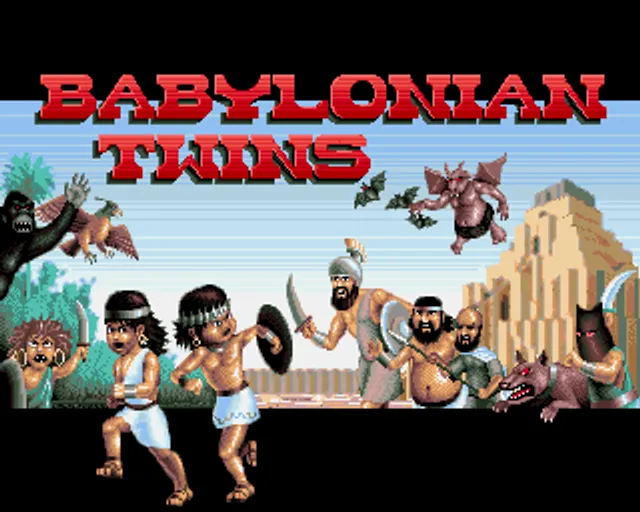
Made under embargo.
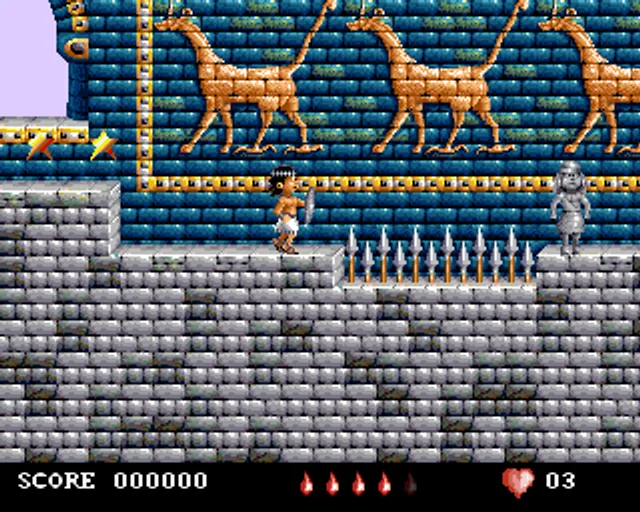
A computer-engineering student named Rabah Shihab sat at an Amiga 500 — half a megabyte of RAM, no hard drive — and wrote, in pure 68000 machine code, what would become the first commercial-quality video game ever made in Iraq.
The city was under sanctions. Parts were scarce, manuals were photocopies, and every byte had to be earned. Over long nights the twin princes Nasir & Blasir took shape — hand-drawn, frame by frame — climbing ziggurats and vaulting across a Babylon rendered from memory and old photographs.
Art by Murtadha Salman, music by Mahir AlSalman. The game ran on the Amiga's custom chipset with smooth parallax and hand-drawn animation — a technical feat for 512 KB. Then the masters went onto floppy disks, and the disks went into a backpack that crossed borders. The game never got its release.
Back from the dead.
Covered by Wired, Ars Technica and Edge · Featured by Apple & Google
In 2008 a video of the lost Amiga game surfaced online, and the Amiga community took notice. A playable demo followed — downloaded from more than 70 countries. That response reunited the team and led to a full restoration.
Sixteen years after Baghdad, Babylonian Twins was rebuilt for a new generation and re-released on iPhone and iPad — eventually reaching over two million players around the world.
The press treated it as a piece of gaming history: Wired, Ars Technica, Edge, TouchArcade and Pocket Gamer covered the first Iraqi-made game and its unlikely journey from the Amiga to the App Store.
The Definitive Edition.
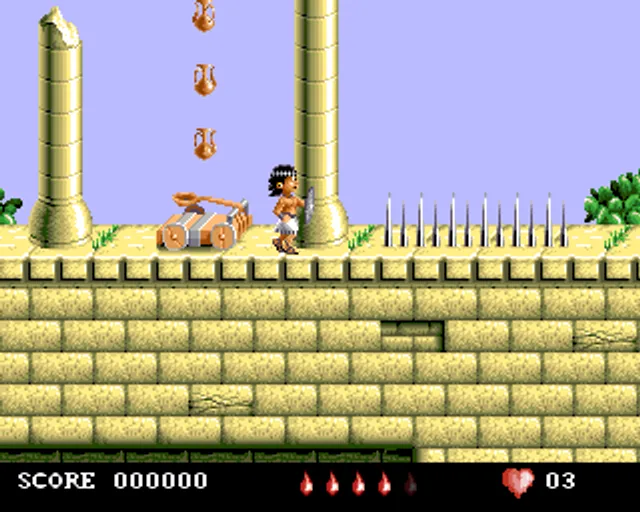 1993
1993 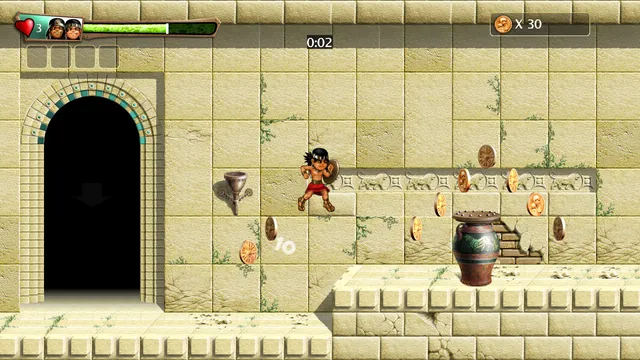 2026
2026 Thirty-three years after Baghdad, the game returns rebuilt in a modern engine — faithful to every jump and secret of the original, and finished with the comfort of a modern game.
Crisp art, full gamepad and Steam Input support, achievements, leaderboards, cloud saves, and eleven languages including the right-to-left Arabic it was born in. The Definitive Edition comes to Steam for Windows, Mac and Linux, alongside the mobile releases.
And the ending of the long story: the complete, never-released 1993 Amiga original — fully playable — is included in every Steam copy. The artifact and the remake, together at last.